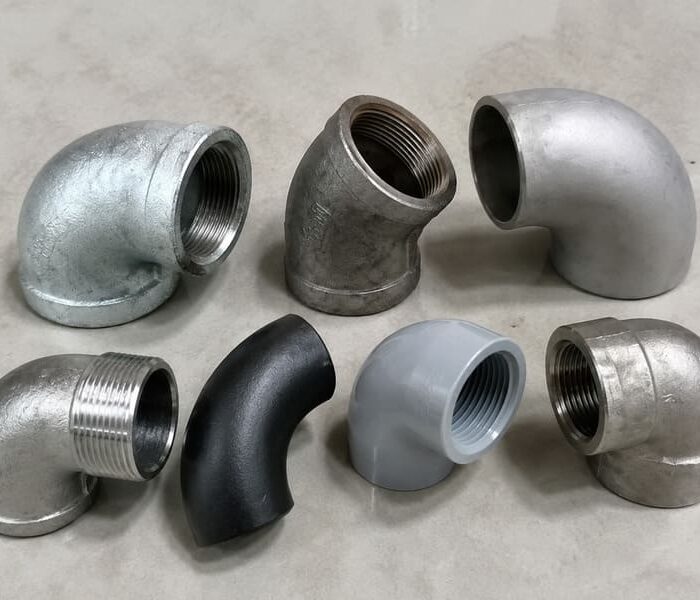
This guide provides all the information about pipe elbows, including types, pressure grades, angles, and connection methods.
To distinguish between welded and threaded pipe elbows, I will introduce 3 types of welded elbows and multiple types of threaded elbows.
First, let me introduce myself. We are a manufacturer with our own factory. Our main product lines include pipe nipples, couplings, and a series of stainless steel pipe fittings. We can also customize products according to your drawings and requirements. Welcome to contact us if you have any related needs.
OK, let’s get started!
Threaded Elbow
Threaded elbow, as its name suggests, is a pipe elbow with threads on the ends to connect with other threaded pipe fittings without welding.
2 Technologies of Threaded Elbows
Forged Threaded Elbow
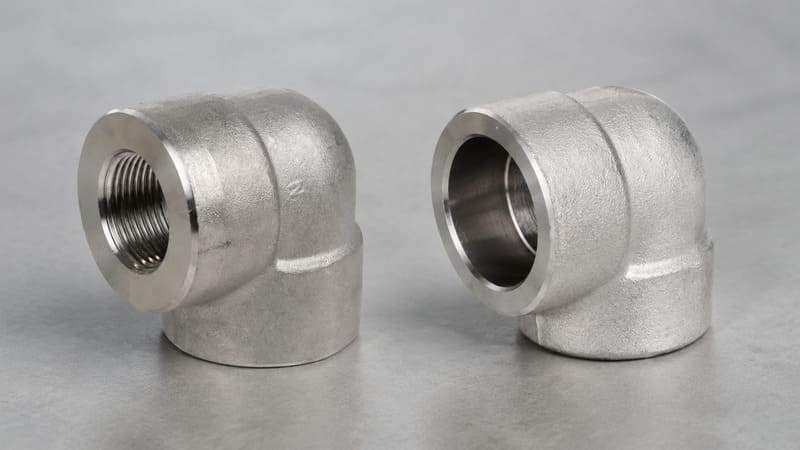
Forged threaded elbows are manufactured using forging technology. They usually have Class 2000, Class 3000, and Class 6000 pressure grades. They feature thicker wall thickness and reinforced ends.
Casting Elbow
Casting elbows are manufactured by casting. Normal pressure grades include 150Lb and 125Lb, with standard wall thickness.
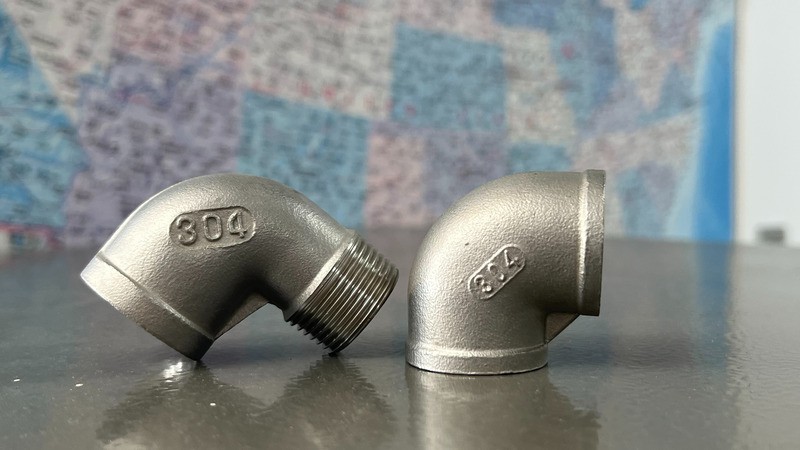
4 Angles of Elbows
90 Degree Elbow
A 90-degree elbow is the most common type. It changes the pipeline direction by 90 degrees.
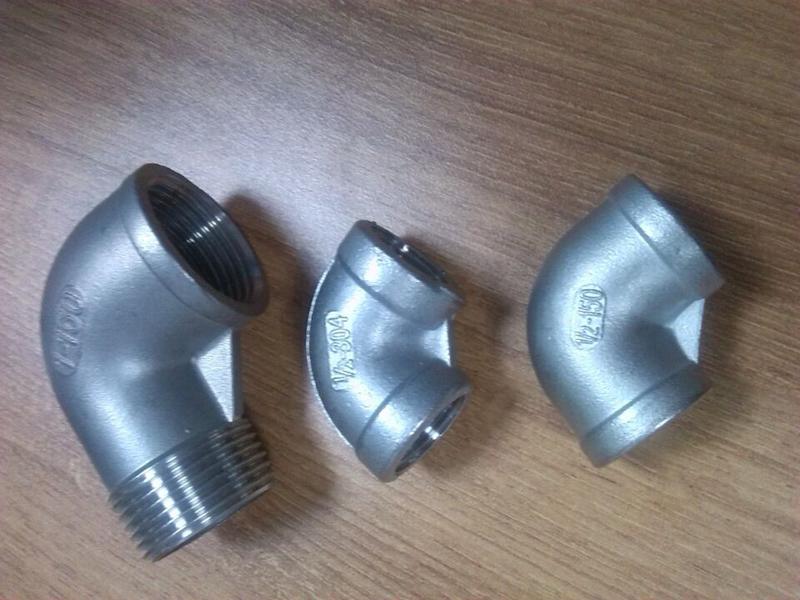
45 Degree Elbow
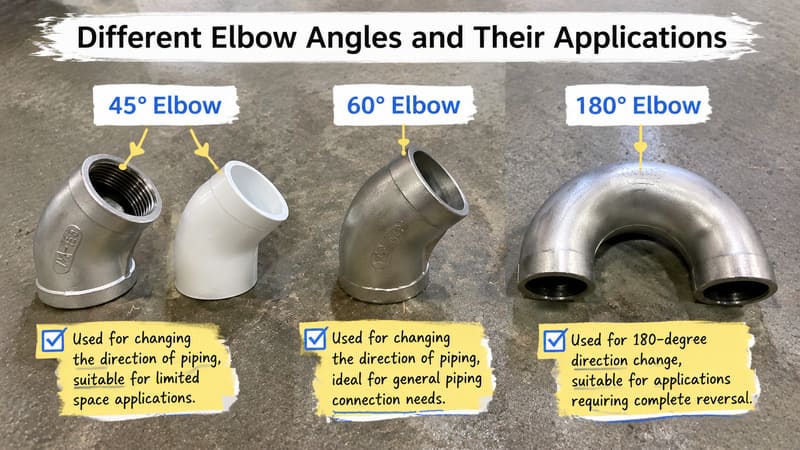
A 45-degree elbow creates less resistance to fluid flow compared with a 90-degree elbow.
60 Degree and 180 Degree Elbow
60-degree and 180-degree elbows are not commonly used in normal piping systems.
4 Thread Types
NPT
NPT is a tapered thread. The tighter it is tightened, the better the sealing effect. It is commonly used in American standard piping systems.
BSPT
BSPT is also a tapered thread. It is commonly used in Europe and Asia. It is not universally compatible with NPT threads.
BSPP
BSPP is a parallel thread. Sealing usually requires a gasket or sealing washer.
NPS (National Pipe Straight)
NPS is a parallel thread and is rarely used alone in elbow applications.
Different Female and Male Threaded Elbows
Female Elbow
A female elbow has female threads on both ends. It is the most common type.
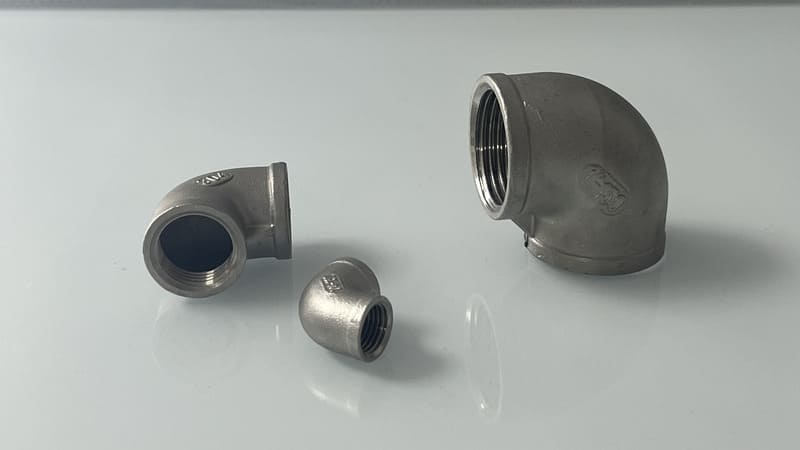
Male Elbow
A male elbow has male threads on both ends. It is less common and usually used for special applications.
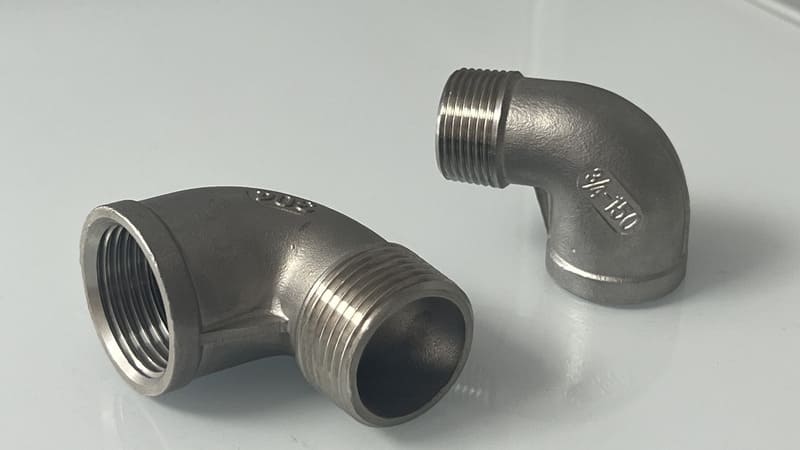
Street Elbow
A street elbow has one male end and one female threaded end. The male end can be directly inserted into another female threaded fitting without requiring an additional threaded fitting. It is commonly used where installation space is limited.
Special Type
Reducing Elbow
A reducing elbow has two different sizes on both ends. It changes the pipeline direction while also reducing or increasing the pipe diameter.
Types of Welded Elbows
Butt Weld Elbow
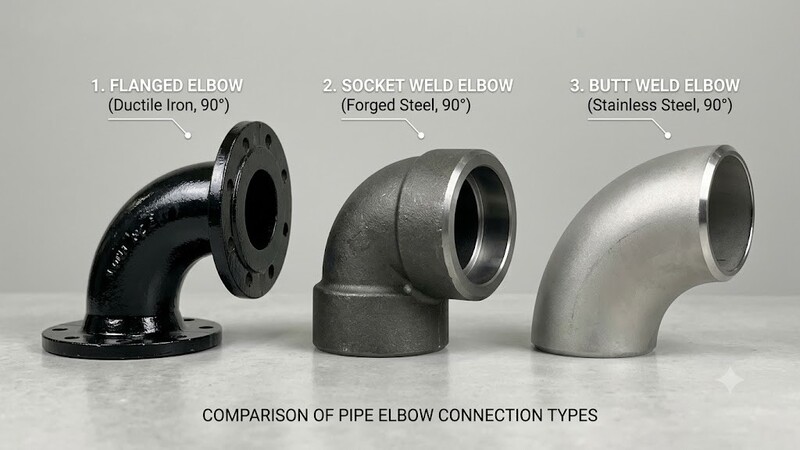
A butt weld elbow, also called a welded pipe elbow, has beveled ends on both sides and a smooth welded body.
It provides smooth fluid flow, higher sanitary performance, high strength, and resistance to high pressure and high temperature. It is commonly used for large nominal pipe sizes.
Socket Weld Elbow
The end of a socket weld elbow is similar to the rim of a cup, where the pipe is inserted into the socket and welded.
It provides fast and easy installation and is suitable for high-pressure piping systems with small nominal sizes.
Socket weld elbows use an insertion connection and are suitable for smaller nominal sizes because they are quick and easy to weld.
Butt weld elbows use end-to-end welding and are suitable for large nominal sizes, high pressure, high temperature, and applications with higher sanitary requirements.
Flanged Elbow
The body of a flanged elbow is similar to a butt weld elbow, except that it has two flanges on both ends.
A flanged elbow does not require welding. Instead, it connects and seals through bolts and gaskets.
The biggest advantage is that it can be removed easily without cutting the pipeline. It is convenient for applications that require frequent replacement and maintenance.
| Type | Connection Method | Removal |
|---|---|---|
| Socket Weld | Pipes are inserted into the ends of elbows and welded. | Cannot be removed. The connection is sealed and requires cutting for removal. |
| Butt Weld | Elbows and pipes are aligned and welded from end to end. | Cannot be removed. The connection is sealed and requires cutting for removal. |
| Flanged | Two flange pieces are connected with the elbow in the middle and locked with bolts. | Can be removed easily by simply loosening the bolts. |